
Views: 0 Author: Edith Wei Publish Time: 2025-07-08 Origin: edith@promalting.com


Driving up from the main road we are presented with a crisp, clean and uncluttered yard. Moving towards the back of the property is a rather imposing ‘red’ building with the highly noticeable logo which is famous for Red Shed Malting @redshedmalting.com. Approaching the main building it is inescapable to notice how well kept the exterior of the building and surrounding grounds are. Neat and tidy which screams great attitude and the fastidious nature in which the Hamill’s believe the business should look and be run. As we saw from the assessment of the food safety side of the business, Jan Landry Jan Landry found that the facility had excellent hygiene and hygiene practices. Both the inside and the outside of the production and operations areas were ‘spit spot’. From an outsider looking in (maltster to maltster), this is a gold standard that needs to be maintained to ensure no contamination to ingoing materials or outgoing production.
Off the office entrance we were met with a small warehousing area in which differing product types (25 kg bags) were neatly stacked and stored on pallets in the pallet racks. On one wall there was the omnipresent bagging machine that had been newly renovated and waiting for the next production run.
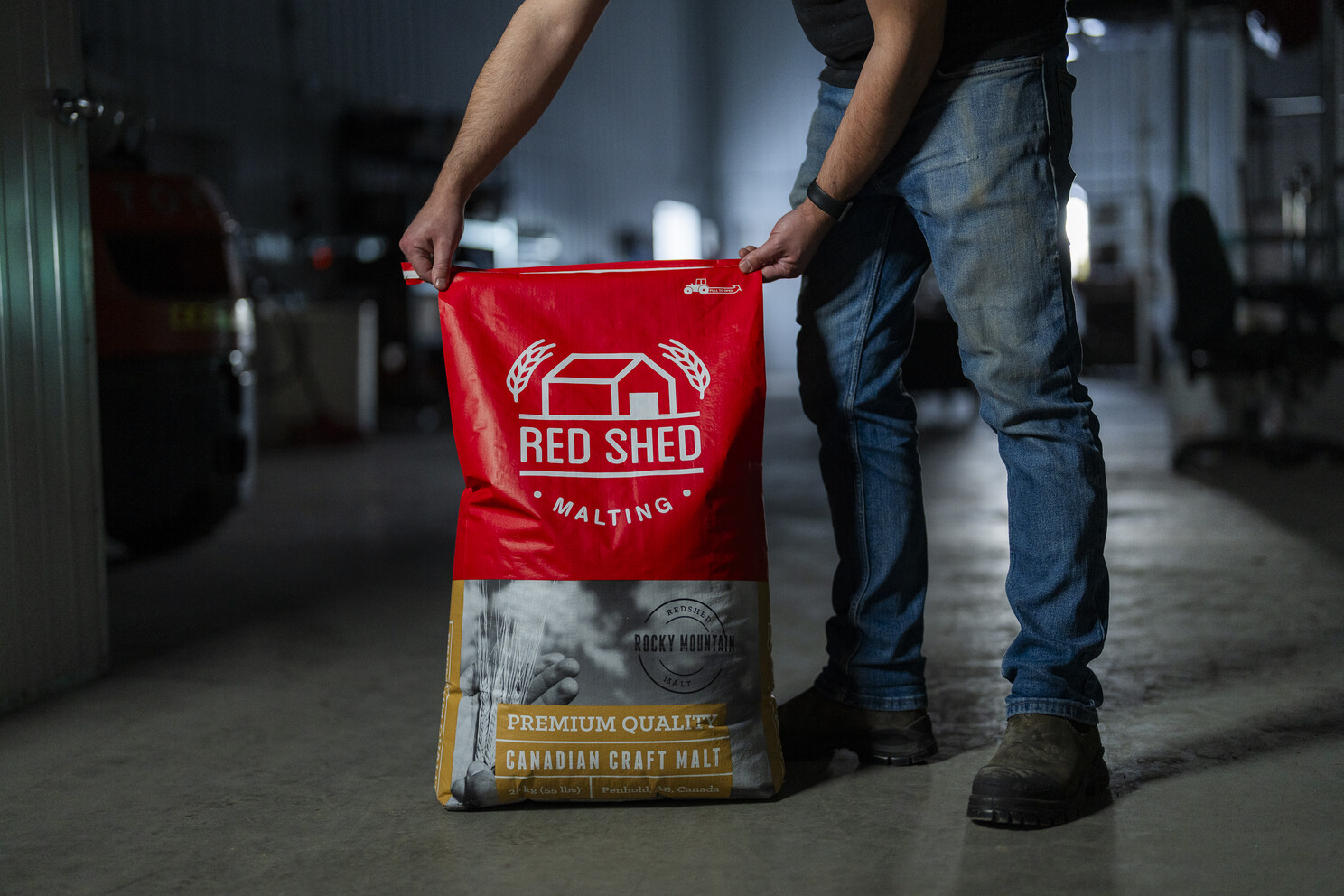
Quality in the bag
Separation of raw grains and finished malt are well handled at Red Shed with outside bins handling each product separately with separate conveyors. Any cross contamination is eliminated with standard flushing procedures if required.

Busy days
Production procedures and protocols have been thoroughly vetted and documented, and the start of a batch is quick and efficient. Hence, water uptake is quick and homogenous, setting up each batch for good uniformity. Joe has been instrumental in developing a customized batch system that tracks all the inputs and outputs of the system from start to finish which makes for an excellent traceability tool. The start of the malting process (steeping) runs seamlessly in the background from conveyors connected to exterior bins that have been tested and specifications rigorously checked and verified by in-house testing. Steeped barley is transferred pneumatically to a 10 metric tonne, stainless steel germination vessel whereby the grains germinate under temperature and humidity control having a unique mixing feature which is specific to their equipment (Laizhou Yingtai Machinery Co., Ltd., promalting.com).

steeping
As the system is a GKV style, there is no need to move the product to another vessel (great for keeping better integrity of finished product due to less movement, less damage). The equipment comes with a control system that handles all grain movements, water and water temperature, transfers, vessel temperatures, humidity and kilning from one screen making the operation simple, safe and easy to maintain. Finished malt is shuttled to conveyors or moved to the roasting facility (yes, there is a roaster too! – what fun) and then eventually either temporarily stored or goes to bagging immediately.
#malthouse #craftmalting #farmmalting